

The Redemption of the Exile
Read Genesis 11:8, 9 and Genesis 9:1; compare these with Genesis 1:28. Why is God’s dispersion redemptive?
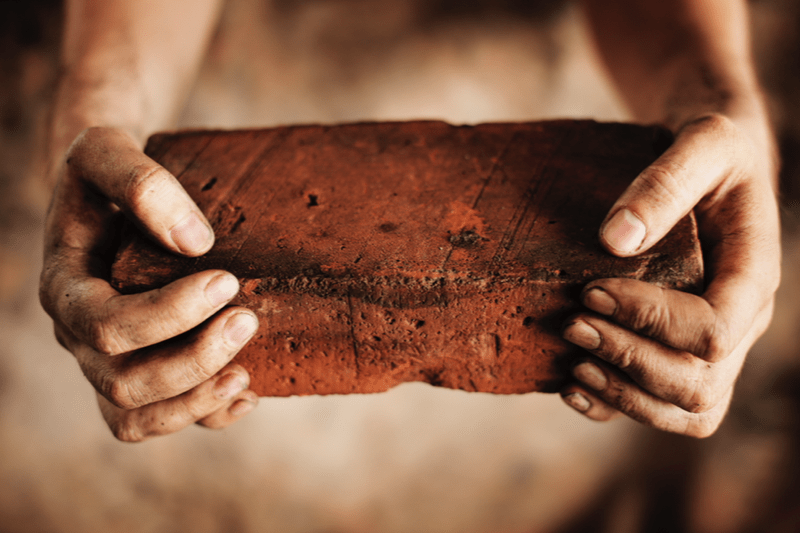
God’s design and blessing for humans was that they would “ ‘multiply, and fill the earth’ ” (Gen. 9:1, NKJV; compare with Gen. 1:28, NKJV). Against God’s plan, the builders of Babel preferred to stick together as the same people. One reason they said they wanted to build the city was so that they would not “ ‘be scattered abroad over the face of the whole earth’ ” (Gen. 11:4, NKJV). They refused to move elsewhere, perhaps thinking that together they would be more powerful than they would be separated and scattered. And, in one sense, they were right.
Unfortunately, they sought to use their united power for evil, not good. They wanted to “ ‘make a name for ourselves,’ ” a powerful reflection of their own arrogance and pride. Indeed, whenever humans, in open defiance of God, want to “ ‘make a name’ ” for themselves, we can be sure it won’t turn out well. It never has.
Hence, in a judgment against their outright defiance, God scattered them across “the face of all the earth” (Gen. 11:9), exactly what they didn’t want to happen.
Interestingly enough, the name Babel, which means “door of God,” is related to the verb balal, which means “confuse” (Gen. 11:9). It is because they wanted to reach the “door” of God, because they thought of themselves as God, that they ended up confused and much less powerful than before.
“The men of Babel had determined to establish a government that should be independent of God. There were some among them, however, who feared the Lord, but who had been deceived by the pretensions of the ungodly and drawn into their schemes. For the sake of these faithful ones the Lord delayed His judgments and gave the people time to reveal their true character. As this was developed, the sons of God labored to turn them from their purpose; but the people were fully united in their Heaven-daring undertaking. Had they gone on unchecked, they would have demoralized the world in its infancy. Their confederacy was founded in rebellion; a kingdom established for self-exaltation, but in which God was to have no rule or honor.”—Ellen G. White, Patriarchs and Prophets, p. 123.
Why must we be very careful about seeking to “make a name” for ourselves?
Supplemental EGW Notes
[The enemies of God] exalted themselves against God. But He would not permit them to complete their work. They had built their tower to a lofty height when the Lord sent two angels to confound them in their work. Men had been appointed for the purpose of receiving word from the workmen at the top of the tower, calling for material for their work, which the first would communicate to the second, and he to the third, until the word reached those on the ground. As the word was passing from one to another in its descent, the angels confounded their language, and when the word reached the workmen upon the ground, material was called for which had not been required. And after the laborious process of getting the material to the workmen at the top of the tower, it was not that which they wished for. Disappointed and enraged, they reproached those whom they supposed were at fault.
After this there was no harmony in their work. Angry with one another, and unable to account for the misunderstanding and strange words among them, they left the work and separated from each other and scattered abroad in [the] earth. Up to this time men had spoken but one language. Lightning from heaven, as a token of God’s wrath, broke off the top of their tower, casting it to the ground. Thus God would show to rebellious man that He is supreme.—The Story of Redemption, p. 73.
In mercy [God] confounded their speech, thus putting a check on their purposes of rebellion. God bears long with the perversity of men, giving them ample opportunity for repentance; but He marks all their devices to resist the authority of His just and holy law. From time to time the unseen hand that holds the scepter of government is stretched out to restrain iniquity. Unmistakable evidence is given that the Creator of the universe, the One infinite in wisdom and love and truth, is the Supreme Ruler of heaven and earth, and that none can with impunity defy His power.
The schemes of the Babel builders ended in shame and defeat. The monument to their pride became the memorial of their folly. Yet men are continually pursuing the same course—depending upon self, and rejecting God’s law. It is the principle that Satan tried to carry out in heaven; the same that governed Cain in presenting his offering.—Patriarchs and Prophets, p. 123.
[God] is the Maker of all mankind. All men are of one family by creation, and all are one through redemption. Christ came to demolish every wall of partition, to throw open every compartment of the temple courts, that every soul may have free access to God. His love is so broad, so deep, so full, that it penetrates everywhere. It lifts out of Satan’s influence those who have been deluded by his deceptions, and places them within reach of the throne of God, the throne encircled by the rainbow of promise. In Christ there is neither Jew nor Greek, bond nor free.—Prophets and Kings, pp. 369, 370.
The above quotations are taken from Ellen G. White Notes for the Sabbath School Lessons, published by Pacific Press Publishing Association. Used by permission.