

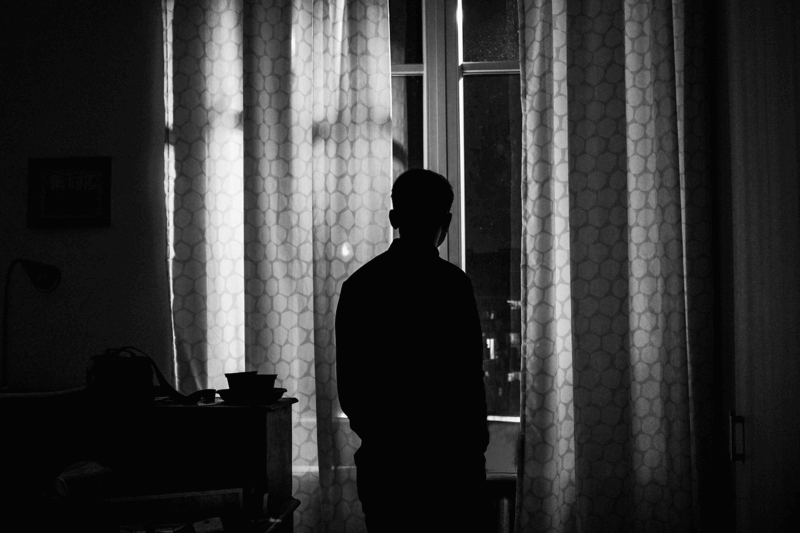
Loss of Freedom
God alone knows how many millions, even billions, of people struggle with some form of addiction. To this day, scientists still don’t understand exactly what causes it, even though in some cases they actually can see the part of our brain in which the cravings and desires are located.
Unfortunately, however, finding the locations of those addictions is not the same thing as freeing us from the addictions.
Addiction is hard on everyone, not just the addict. Family members—parents, spouses, children—all suffer greatly when any member of the family is under the grip of a power that they just can’t seem to get free of.
Drugs, alcohol, tobacco, gambling, pornography, sex, even food— what makes these things into addictions is the habitual and progressive nature of their use or abuse. You are unable to stop even when you know that it is harming you. While enjoying your freedom of choice, you become a slave to whatever you are addicted to, and so you actually lose your freedom. Peter has a simple explanation of what an addiction is and its results: “They promise freedom to everyone. But they are merely slaves of filthy living, because people are slaves of whatever controls them” (2 Pet. 2:19, CEV).
What are the things that can lead people into addiction? Luke 16:13, Rom. 6:16, James 1:13–15, 1 John 2:16.
Sin and addiction are not, necessarily, the same thing. You can commit a sin that you are not addicted to, though so often it can turn into an addiction. How much better, through the power of God, to stop the sin before it turns into an addiction. And, of course, the only lasting solution to the sin and addiction problem is by receiving a new heart. “Because we belong to Christ Jesus, we have killed our selfish feelings and desires” (Gal. 5:24, CEV). Paul also explains to the Romans what it means to die to that sinful, addictive nature so we can live for Christ (Rom. 6:8–13), and then adds, “Let the Lord Jesus Christ be as near to you as the clothes you wear. Then you won’t try to satisfy your selfish desires” (Rom. 13:14, CEV).
Who has not personally known the struggle of addiction, either ourselves or in that of others, maybe even family members? How can you help people realize that it’s not an admission of spiritual failure if, even as Christians, they might still need professional help?
Additional Reading: Selected Quotes from Ellen G. White
If we would permit our minds to dwell more upon Christ and the heavenly world, we should find a powerful stimulus and support in fighting the battles of the Lord. Pride and love of the world will lose their power as we contemplate the glories of that better land so soon to be our home. Beside the loveliness of Christ, all earthly attractions will seem of little worth.
. . . When the mind has been long permitted to dwell only on earthly things, it is a difficult matter to change the habits of thought. That which the eye sees and the ear hears, too often attracts the attention and absorbs the interest. But if we would enter the city of God, and look upon Jesus and His glory, we must become accustomed to beholding Him with the eye of faith here. The words and the character of Christ should be often the subject of our thoughts and of our conversation, and each day some time should be especially devoted to prayerful meditation upon these sacred themes.—The Sanctified Life, pp. 91, 92.
Jesus will be the helper of all who put their trust in Him. Those who are connected with Christ have happiness at their command. They follow the path where their Saviour leads, for His sake crucifying the flesh, with its affections and lusts. They have built their hopes on Christ, and the storms of earth are powerless to sweep them from the sure foundation.—In Heavenly Places, p. 198.
If you draw close to Jesus and seek to adorn your profession by a well-ordered life and godly conversation, your feet will be kept from straying into forbidden paths. If you will only watch, continually watch, unto prayer; if you will do everything as if you were in the immediate presence of God, you will be saved from yielding to temptation and may hope to be kept pure, spotless, and undefiled unto the end.
If you hold the beginning of your confidence firm unto the end, all your way will be established in God, and what grace has begun glory shall crown in the kingdom of our God. “The fruit of the Spirit is love, joy, peace, longsuffering, gentleness, goodness, faith, meekness, temperance: against such there is no law” [Galatians 5:22, 23]. If Christ be within us, we shall crucify the flesh with the affections and lusts.—Testimonies on Sexual Behavior, Adultery, and Divorce, p. 107.
The Christian life is a warfare. But “we wrestle not against flesh and blood, but against principalities, against powers, against the rulers of the darkness of this world, against spiritual wickedness in high places.” In this conflict of righteousness against unrighteousness we can be successful only by divine aid. Our finite will must be brought into submission to the will of the Infinite; the human will must be blended with the divine. This will bring the Holy Spirit to our aid; and every conquest will tend to the recovery of God’s purchased possession, to the restoration of His image in the soul.—Messages to Young People, p. 55.