

One Language
Read Genesis 11:1–4. Why were the people of “the whole earth” so keen to achieve unity?
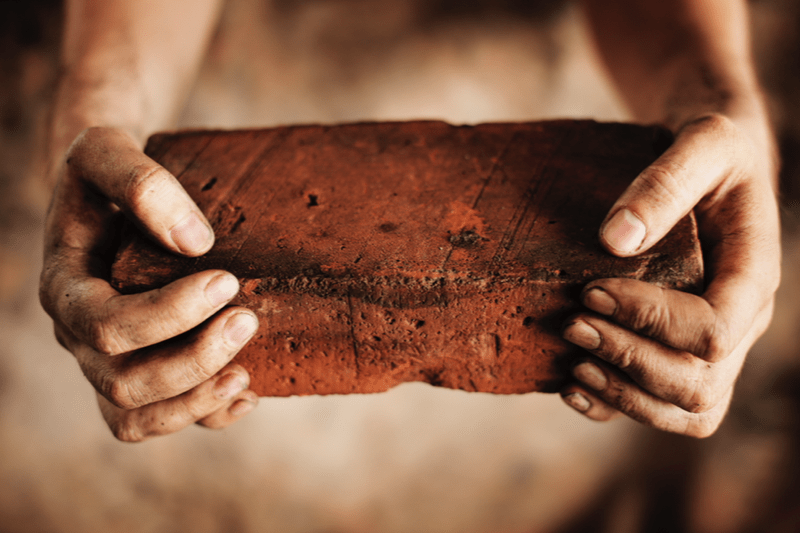
The phrase “the whole earth” refers to a small number of people, those alive after the Flood. The reason for this gathering is clearly indicated: they want to build a tower to reach the heavens (Gen. 11:4). In fact, their real intention is to take the place of God Himself, the Creator. Significantly, the description of the people’s intentions and actions echo God’s intentions and actions in the Creation account: “they said” (Gen. 11:3, 4; compare with Gen. 1:6, 9, 14, etc.); “let us make” (Gen. 11:3, 4; compare with Gen. 1:26). Their intention is explicitly stated: “ ‘Let us make a name for ourselves’ ” (Gen. 11:4, NKJV), an expression that is exclusively used for God (Isa. 63:12, 14).
In short, the builders of Babel entertained the misplaced ambition to replace God, the Creator. (We know who inspired that, don’t we? See Isa. 14:14.) The memory of the Flood surely must have played a role in their project. They built a high tower in order to survive another flood, were another to come, despite God’s promise. The memory of the Flood has been preserved in Babylonian tradition, albeit distorted, in connection with the construction of the city of Babel (Babylon). This upward effort to reach heaven and usurp God will, indeed, characterize the spirit of Babylon.
This is why the story of the Tower of Babel is such an important motif in the book of Daniel, as well. The reference to Shinar, which introduces the story of the Tower of Babel (Gen. 11:2), reappears at the beginning of the book of Daniel, in order to designate the place where Nebuchadnezzar has brought the articles of the temple of Jerusalem (Dan. 1:2). Among many other passages of the book, the episode of Nebuchadnezzar’s erecting the golden statue, probably on the same place in the same “plain,” is the most illustrative of this frame of mind. In his visions of the end, Daniel sees the same scenario of the nations of the earth gathering together to achieve unity against God (Dan. 2:43, Dan. 11:43–45; compare with Rev. 16:14–16), though this attempt fails here, as it did at Babel, as well.
A famous secular French writer in the past century said the great purpose of humanity was to try “to be God.” What is it about us, starting with Eve in Eden (Gen. 3:5), that gets drawn into this dangerous lie?
Supplemental EGW Notes
No sooner was the earth repeopled than men resumed their hostility to God and heaven. They transmitted their enmity to their posterity, as though the art and device of misleading men, and causing them to continue the unnatural warfare, was a sacred legacy.
This confederacy was born of rebellion against God. The dwellers on the plain of Shinar established their kingdom for self-exaltation, not for the glory of God. Had they succeeded, a mighty power would have borne sway, banishing righteousness, and inaugurating a new religion. The world would have been demoralized. The mixture of religious ideas with erroneous theories would have resulted in closing the door to peace, happiness, and security. These suppositions, erroneous theories, carried out and perfected, would have directed minds from allegiance to the divine statutes, and the law of Jehovah would have been ignored and forgotten. Determined men, inspired and urged on by the first great rebel, would have resisted any interference with their plans or their evil course. In the place of the divine precepts they would have substituted laws framed in accordance with the desires of their selfish hearts, in order that they might carry out their purposes.—Ellen G. White Comments, in The SDA Bible Commentary, vol. 1, pp. 1091, 1092.
[The enemies of God] reasoned that they would secure themselves in case of another flood, for they would build their tower to a much greater height than the waters prevailed in the time of the Flood, and all the world would honor them, and they would be as gods and rule over the people. This tower was calculated to exalt its builders, and was designed to turn the attention of others who should live upon the earth from God to join with them in their idolatry. Before the work of building was accomplished, people dwelt in the tower. Rooms were splendidly furnished, decorated, and devoted to their idols. Those who did not believe in God imagined if their tower could reach unto the clouds, they would be able to discover reasons for the Flood.—The Story of Redemption, pp. 72, 73.
In the Word of God are represented two contending parties that influence and control human agencies in our world. Constantly these parties are working with every human being. Those who are under God’s control and who are influenced by the heavenly angels, will be able to discern the crafty workings of the unseen powers of darkness. Those who desire to be in harmony with the heavenly agencies should be intensely in earnest to do God’s will. They must give no place whatever to Satan and his angels.
But unless we are constantly on guard, we shall be overcome by the enemy. Although a solemn revelation of God’s will concerning us has been revealed to all, yet a knowledge of His will does not set aside the necessity of offering earnest supplications to Him for help, and of diligently seeking to cooperate with Him in answering the prayers offered. He accomplishes His purposes through human instrumentalities.—Ellen G. White Comments, in The SDA Bible Commentary, vol. 6, p. 1119.
The above quotations are taken from Ellen G. White Notes for the Sabbath School Lessons, published by Pacific Press Publishing Association. Used by permission.