

The End of the Flood
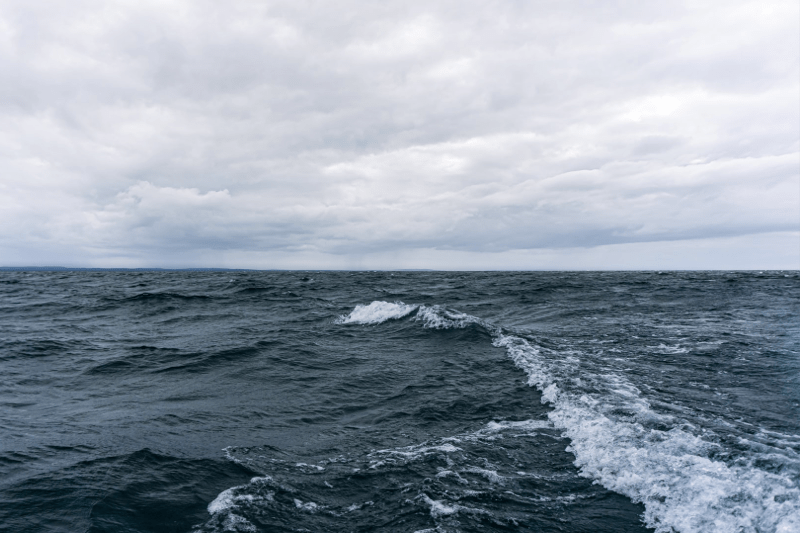
Genesis 7:22–24 describes the overwhelming and comprehensive effect of the waters, which “destroyed all living things” (Gen. 7:23, NKJV) and “prevailed on the earth one hundred and fifty days” (Gen. 7:24, NKJV). It is against this background of total annihilation and hopelessness that “God remembered” (Gen. 8:1). This phrase is situated in the center of the texts covering the Flood, an indication that this idea is the central message of the Flood story.
Read Genesis 8:1. What does it mean that God “remembered” Noah?
The verb zakhar, “remember,” means that God had not forgotten; it is more than just a mental exercise. In the biblical context, the “God who remembers” means the fulfillment of His promise and often refers to salvation (see Gen. 19:29). In the context of the Flood, “God remembered” means that the waters “stopped” (Gen. 8:2) and that Noah will soon be able to leave the ark (Gen. 8:16).
Though no direct command is yet given to leave, Noah takes the initiative and sends first a raven, and then a dove, to test the situation. Finally, when the dove does not come back, he understands “that the waters were dried up from the earth; and Noah removed the covering of the ark and looked” (Gen. 8:13, NKJV).
Noah’s behavior is rich in practical lessons. On one hand, it teaches us to trust God even though He does not yet directly speak; on the other hand, faith does not deny the value of thinking and testing. Faith does not exclude the duty to think, to seek, and to see if what we learned is true.
And yet, Noah goes out only when God, finally, tells him to do so (Gen. 8:15–19). That is, even when he knows it’s safe to leave, Noah still relies on God and waits for God’s signal before going out of the ark. He waited patiently within the ark. “As he had entered at God’s command, he waited for special directions to depart. . . . At last an angel descended from heaven, opened the massive door, and bade the patriarch and his household go forth upon the earth and take with them every living thing.”—Ellen G. White, Patriarchs and Prophets, p. 105.
Read Genesis 8:1, Genesis 19:29, and Psalm 106:4. What does the expression “God remembers” mean? What does this truth mean for us, now—that is, how has God shown you that He “remembers” you?
Supplemental EGW Notes
As the violence of the storm increased, trees, buildings, rocks, and earth were hurled in every direction. The terror of man and beast was beyond description. Above the roar of the tempest was heard the wailing of a people that had despised the authority of God. Satan himself, who was compelled to remain in the midst of the warring elements, feared for his own existence. . . . In that terrible hour [the people] saw that the transgression of God’s law had caused their ruin. Yet while, through fear of punishment, they acknowledged their sin, they felt no true contrition, no abhorrence of evil. They would have returned to their defiance of Heaven, had the judgment been removed. So when God’s judgments shall fall upon the earth before its deluge by fire, the impenitent will know just where and what their sin is—the despising of His holy law. Yet they will have no more true repentance than did the old-world sinners. . . .
Love, no less than justice, demanded that God’s judgments should put a check on sin. The avenging waters swept over the last retreat, and the despisers of God perished in the black depths.—Patriarchs and Prophets, pp. 99–101.
The waters had been fifteen cubits above the highest mountains. The Lord remembered Noah, and as the waters decreased, he caused the ark to rest upon the top of a cluster of mountains, which God in his power had preserved and made them to stand fast all through that violent storm. These mountains were but a little distance apart, and the ark moved about and rested upon one, then another of these mountains, and was no more driven upon the boundless ocean. This gave great relief to Noah and all within the ark. As the mountains and hills appeared they were in a broken, rough condition, and all around them appeared like a sea of roiled water or soft mud.—Spiritual Gifts, vol. 3, p. 77.
“By faith Noah, being warned of God of things not seen as yet, moved with fear, prepared an ark to the saving of his house; by the which he condemned the world, and became heir of the righteousness which is by faith.” Hebrews 11:7. While Noah was giving his warning message to the world, his works testified of his sincerity. It was thus that his faith was perfected and made evident. He gave the world an example of believing just what God says. All that he possessed, he invested in the ark. As he began to construct that immense boat on dry ground, multitudes came from every direction to see the strange sight and to hear the earnest, fervent words of the singular preacher. Every blow struck upon the ark was a witness to the people.—Patriarchs and Prophets, p. 95.
Oh, how easy for us to forget God, while He never forgets us; He visits us with His mercies every hour.—Our High Calling, p. 314.
The above quotations are taken from Ellen G. White Notes for the Sabbath School Lessons, published by Pacific Press Publishing Association. Used by permission.