

Stewards of the Earth
According to the Bible’s record, the Garden of Eden and the newly created earth were places of abundance, created for life to flourish and particularly for human beings to enjoy.
But God also gave the first man and woman—and the rest of us who would come after them—a role to play in His creation. It quickly became obvious—and not just from His method of creation—that Adam and Eve were to have a special status in this new world.
Adam was first given the job of naming the animals and birds (see Gen. 2:19). Then he was given another role, presented as a blessing from God Himself: “God blessed them and said to them, ‘Be fruitful and increase in number; fill the earth and subdue it. Rule over the fish in the sea and the birds of the air and over every living creature that moves on the ground’ ” (Gen. 1:28, NIV).
Read and compare Genesis 1:28 and Genesis 2:15. How would you characterize the human job description in a sentence or two?
Too often in Christian history, Genesis 1:28 has been used by some as a license to exploit, even to the point of destroying the natural world. Yes, the world obviously was created for human life, benefit, and enjoyment. But the human responsibility is to “work it and take care of it”—in the words of Genesis 2:15 (NIV).
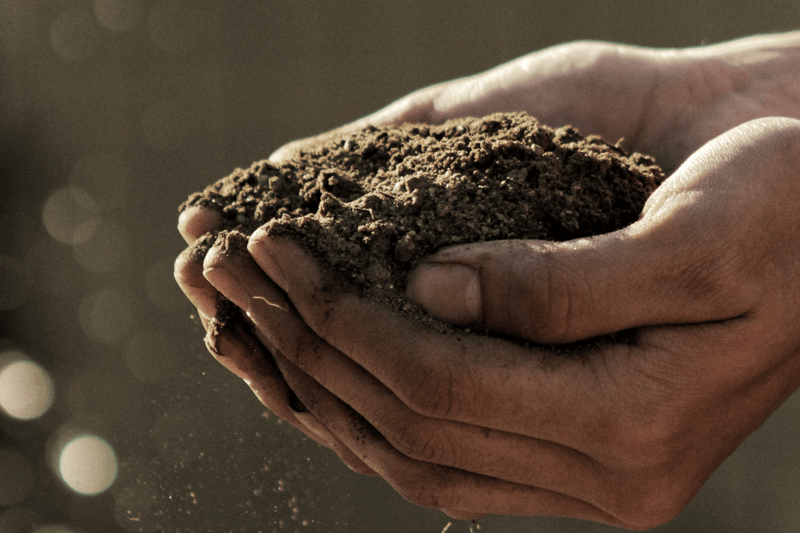
When we talk about stewardship, our first thought is often about money, but the first command for stewardship in the Bible is to care for the earth that God has created and entrusted to us. The command to Adam and Eve also foresaw that the earth would be shared with their children and with future generations. In the original plan for the world, the created world would continue to be a source of life, goodness, and beauty for all human beings, and Adam and Eve would have a big role in taking care of it.
The earth is still the Lord’s (see Ps. 24:1), and we are still called to be stewards of all that God has given us. Perhaps we could conclude, as well, that in a fallen world our responsibility as stewards is even greater.
What does it mean to you to be a steward of the earth today, in a fallen world? How should the realization of this responsibility affect how you live on a day-to-day basis?
Additional Reading: Selected Quotes from Ellen G. White
And the Lord God took the man, and put him into the garden of Eden to dress it and to keep it. Genesis 2:15.
One of the first laws of the being is that of action. Every organ of the body has its appointed work, upon the development of which depends its strength. The normal action of all the organs gives vigor and life; inaction brings decay and death.
To the dwellers in Eden was committed the care of the garden, “to dress it and to keep it.” . . . God appointed labor as a blessing to man, to occupy his mind, to strengthen his body, and to develop his faculties. In mental and physical activity, Adam found one of the highest pleasures of his holy existence.—The Faith I Live By, p. 232.
“And the Lord God planted a garden eastward in Eden; and there He put the man whom He had formed.” Everything that God had made was the perfection of beauty, and nothing seemed wanting that could contribute to the happiness of the holy pair; yet the Creator gave them still another token of His love, by preparing a garden especially for their home. In this garden were trees of every variety, many of them laden with fragrant and delicious fruit. There were lovely vines, growing upright, yet presenting a most graceful appearance, with their branches drooping under their load of tempting fruit of the richest and most varied hues. It was the work of Adam and Eve to train the branches of the vine to form bowers, thus making for themselves a dwelling from living trees covered with foliage and fruit.—Patriarchs and Prophets, pp. 46, 47.
[God] manifested His great love to them by planting a garden especially for them. A portion of their time was to be occupied in the happy employment of dressing the garden, and a portion in receiving the visits of angels, listening to their instruction, and in happy meditation. Their labor was not wearisome but pleasant and invigorating. This beautiful garden was to be their home.—The Story of Redemption, p. 21.
We are not to be put about and discouraged about temporal things because of apparent failures, nor should we be disheartened by delay. We should work the soil cheerfully, hopefully, gratefully, believing that the earth holds in her bosom rich stores for the faithful worker to garner, richer than gold or silver. The niggardliness laid to her charge is false witness. With proper, intelligent cultivation the earth will yield its treasures for the benefit of man. . . .
. . . We are to exercise our reasoning powers in the cultivation of the earth, and to have faith in the word of God that has created the fruit of the earth for the service of man. . . .
The cultivation of our lands requires the exercise of all the brainpower and tact we possess. The lands around us testify to the indolence of men. We hope to arouse to action the dormant senses. We hope to see intelligent farmers, who will be rewarded for their earnest labor. The hand and heart must cooperate, bringing new and sensible plans into operation in the cultivation of the soil.—Testimonies to Ministers and Gospel Workers, pp. 243, 244.