

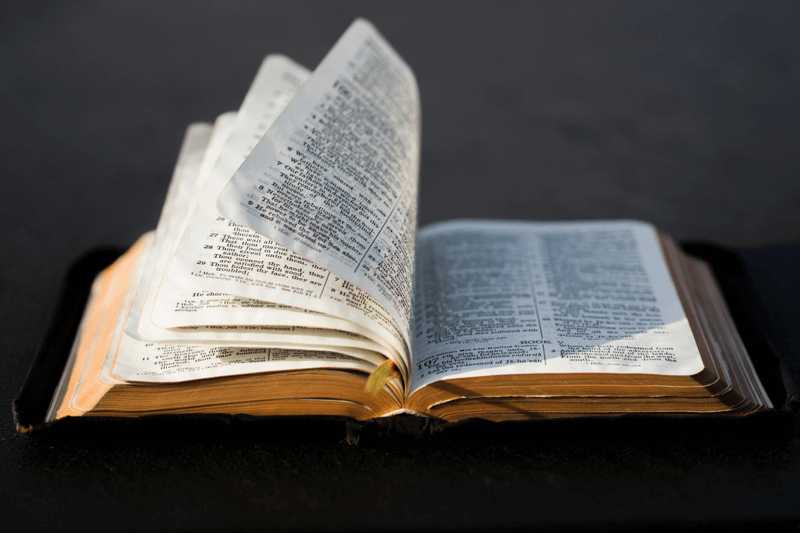
Who Wrote the Bible, and Where?
The variety of authors, their locations, and their backgrounds provide a unique testimony that God works to communicate history and His message to people as culturally diverse as its intended audience.
What do the following texts tell us about the biblical writers and their backgrounds? (Exod. 2:10, Amos 7:14, Jer. 1:1–6, Dan. 6:1–5, Matt. 9:9, Phil. 3:3–6, Rev. 1:9).
The Bible was written by people from many different kinds of backgrounds and in various circumstances. Some were writing from palaces, others from prisons, some in exile, and still others during their missionary journeys to share the gospel. These men had different education and occupations. Some, like Moses, were destined to be kings or, like Daniel, to serve in high positions. Others were simple shepherds. Some were very young and others quite old. Despite these differences, they all had one thing in common: they were called by God and inspired by the Holy Spirit to write messages for His people, no matter when or where they lived.
Also, some of the writers were eyewitnesses to the events they recounted. Others made careful personal investigation of events or careful use of existing documents (Josh. 10:13, Luke 1:1–3). But all parts of the Bible are inspired (2 Tim. 3:16). This is the reason why Paul states that “whatever was written . . . was written for our instruction, so that through . . . the encouragement of the Scriptures we might have hope” (Rom. 15:4, NASB). The God who created human language enables chosen people to communicate inspired thought in a trustworthy and reliable manner in human words.
“God has been pleased to communicate His truth to the world by human agencies, and He Himself, by His Holy Spirit, qualified men and enabled them to do His work. He guided the mind in the selection of what to speak and what to write. The treasure was entrusted to earthen vessels, yet it is, none the less, from Heaven.”—Ellen G. White, Selected Messages, book 1, p. 26.
There were so many different writers, in so many different contexts, and yet the same God is revealed by them all. How does this amazing truth help confirm for us the veracity of God’s Word?
Additional Reading: Selected Quotes from Ellen G. White
The Bible presents a perfect standard of character. This sacred book, inspired by God, and written by holy men, is a perfect guide under all circumstances of life. It sets forth distinctly the duties of both young and old. If made the guide of life, its teachings will lead the soul upward. It will elevate the mind, improve the character, and give peace and joy to the heart. {FE 100.3}
"God committed the preparation of His divinely inspired Word to finite man. This Word, arranged into books, the Old and New Testaments, is the guidebook to the inhabitants of a fallen world, bequeathed to them that, by studying and obeying the directions, not one soul would lose its way to heaven. {1SM 16.3}
Those who think to make the supposed difficulties of Scripture plain, in measuring by their finite rule that which is inspired and that which is not inspired, had better cover their faces, as Elijah when the still small voice spoke to him; for they are in the presence of God and holy angels, who for ages have communicated to men light and knowledge, telling them what to do and what not to do, unfolding before them scenes of thrilling interest, waymark by waymark in symbols and signs and illustrations. {1SM 17.1}"
"Luke, the writer of the book of Acts, and Theophilus, to whom it is addressed, had been pleasantly associated. From Luke, Theophilus had received much instruction and great light. Luke had been Theophilus’ teacher, and he still felt a responsibility to direct and instruct him, and to sustain and protect him in his work. {6BC 1051.3}
At that time it was customary for a writer to send his manuscript to someone for examination and criticism. Luke chose Theophilus, as a man in whom he had confidence, to perform this important work. He first directs the attention of Theophilus to the record of Christ’s life as given in the book of Luke, which had also been addressed by the same writer to Theophilus. [Acts 1:1-5 quoted.] ... The teachings of Christ were to be preserved in manuscripts and books (Manuscript 40, 1903). {6BC 1051.4}"
Had our good Bible been written by uninspired persons, it would have presented quite a different appearance and would have been a discouraging study to erring mortals, who are contending with natural frailties and the temptations of a wily foe. But as it is, we have a correct record of the religious experiences of marked characters in Bible history. Men whom God favored, and to whom He entrusted great responsibilities, were sometimes overcome by temptation and committed sins, even as we of the present day strive, waver, and frequently fall into error. But it is encouraging to our desponding hearts to know that through God’s grace they could gain fresh vigor to again rise above their evil natures; and, remembering this, we are ready to renew the conflict ourselves. {4T 10.2}