

Surprises
“Beloved, do not think it strange concerning the fiery trial which is to try you, as though some strange thing happened to you” (1 Pet. 4:12, NKJV).
Surprises, painful surprises, can come in many ways. A car veering across the road into your path. A sudden notification that you’re losing your job. A medical test that gives you unexpected bad news. Betrayal by someone you loved and who you thought loved you. As bad as the pain can be, it’s always made worse by the element of surprise.
This week we will look at a few specific types of painful situations or crucibles that should not take us by surprise.
To begin, let’s go back to the text for today in Peter. The Greek word for “surprised” in 1 Peter 4:12 means to be “alien” or “foreign.” Peter is urging his readers not to fall into the trap of believing that fiery ordeals and trials are alien to Christian experience. Rather, they are to be considered normal—they can and should be expected.
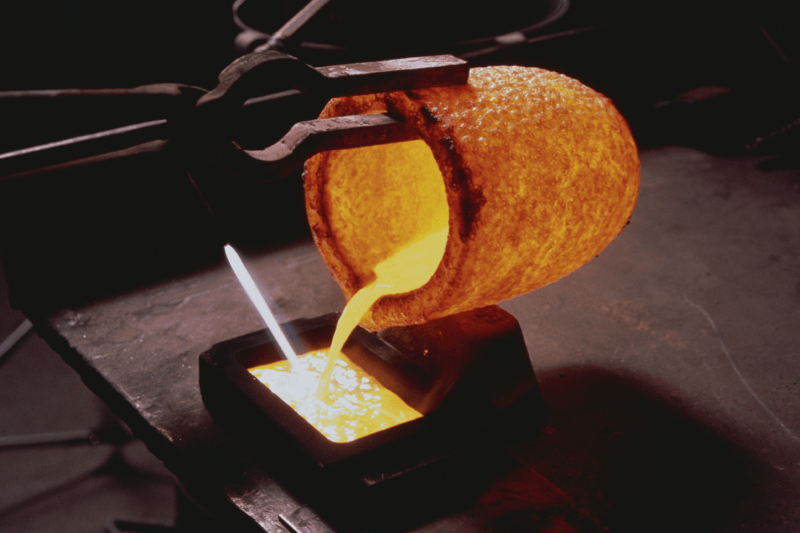
The word used for “fiery ordeal” (NIV, NRSV) or “fiery trial” (NKJV) comes from another Greek word, and it means “a burning.” In other places it is translated “furnace.” This experience of suffering for our faith could therefore be considered a “smelting process,” the process of the crucible.
Read 1 Peter 4:12–19. What is Peter’s message?
Many of us are surprised about suffering because we often have an oversimplified view of the Christian life. We know there are two sides—God, who is good; and Satan, who is bad. But often, we then automatically put everything that feels good in the box with God and everything that feels bad in the box with Satan. But life is not so simple. We cannot use our feelings to decide what is in God’s box or Satan’s box. Sometimes walking with God can be challenging and hard. And following Satan can appear to bring great rewards. Job, who is righteous yet suffering, illustrates this when he asked God, “ ‘Why do the wicked live on, growing old and increasing in power?’ ” (Job 21:7, NIV).
Peter was referring to trials that are the consequence of standing up for Christ. But there also are other reasons that trials come. How could 1 Peter 4:12–19 help you to explain tactfully to a friend why he or she should not be surprised at the painful trials they might face?
Supplemental EGW Notes
It was to Peter a bitter lesson, and one which he learned but slowly, that the path of Christ on earth lay through agony and humiliation. The disciple shrank from fellowship with his Lord in suffering. But in the heat of the furnace fire he was to learn its blessing. Long afterward, when his active form was bowed with the burden of years and labors, he wrote, “Beloved, think it not strange concerning the fiery trial which is to try you, as though some strange thing happened unto you: but rejoice, inasmuch as ye are partakers of Christ’s sufferings; that, when His glory shall be revealed, ye may be glad also with exceeding joy.” 1 Peter 4:12, 13.
. . . [Jesus] said, “If any man will come after Me, let him deny himself, and take up his cross daily, and follow Me.” The cross was associated with the power of Rome. It was the instrument of the most cruel and humiliating form of death. The lowest criminals were required to bear the cross to the place of execution; and often as it was about to be laid upon their shoulders, they resisted with desperate violence, until they were overpowered, and the instrument of torture was bound upon them. But Jesus bade His followers take up the cross and bear it after Him. To the disciples His words, though dimly comprehended, pointed to their submission to the most bitter humiliation,—submission even unto death for the sake of Christ. No more complete self-surrender could the Saviour’s words have pictured.—The Desire of Ages, pp. 416, 417.
The followers of Christ know little of the plots which Satan and his hosts are forming against them. But He who sitteth in the heavens will overrule all these devices for the accomplishment of His deep designs. The Lord permits His people to be subjected to the fiery ordeal of temptation, not because He takes pleasure in their distress and affliction, but because this process is essential to their final victory.
By God’s mighty cleaver of truth we have been taken from the quarry of the world and brought into the workshop of the Lord to be prepared for a place in His temple. In this work the hammer and chisel must act their part, and then comes the polishing. Rebel not under this process of grace. You may be a rough stone, on which much work must be done before you are prepared for the place God designs you to fill. You need not be surprised if with the hammer and the chisel of trial God cuts away your defects of character. He alone can accomplish this work. And be assured that He will not strike one useless blow.—The Faith I Live By, p. 317.
The bright and cheerful side of our religion will be represented by all who are daily consecrated to God. We should not dishonor God by the mournful relation of trials that appear grievous. All trials that are received as educators will produce joy.—Testimonies for the Church, vol. 6, p. 365.
The above quotations are taken from Ellen G. White Notes for the Sabbath School Lessons, published by Pacific Press Publishing Association. Used by permission.