

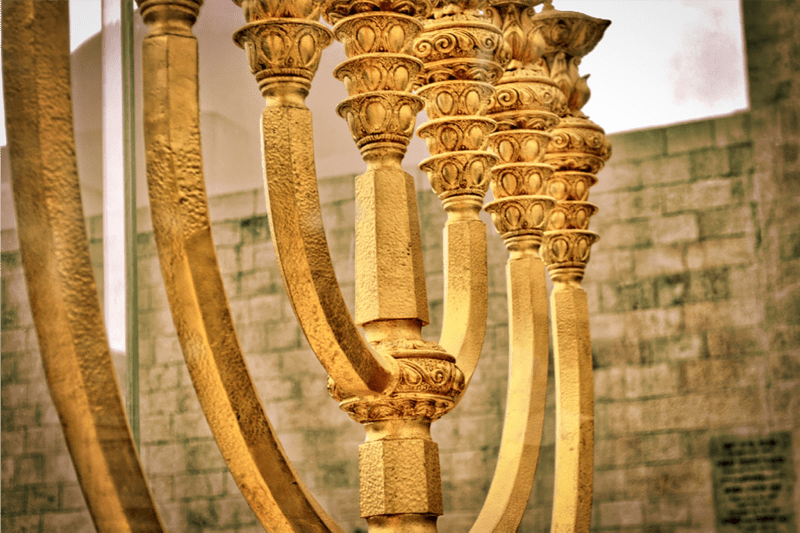
A Priest on Behalf of Human Beings
Read Hebrews 5:1–10. What is the role of the priesthood and, according to this passage, how does Jesus fulfill that role?
The basic purpose of the Levitical priesthood was to mediate between sinful people and God. Priests were appointed by God in order to minister in behalf of human beings; therefore, they needed to be merciful and understanding of human weaknesses.
In Hebrews 5:5–10, Paul shows that Jesus perfectly fulfills those purposes: God appointed Him (Heb. 5:5, 6), and Jesus understands us because He also has suffered (Heb. 5:7, 8).
There are some important differences, however. Jesus was not “chosen from among men” (Heb. 5:1, ESV). Instead, Jesus adopted human nature in order, among other things, to serve as a priest in our behalf. Jesus did not offer sacrifices for His own sins (Heb. 5:3), but only for our sins, because He was sinless (Heb. 4:15, Heb. 7:26–28).
Hebrews says that Jesus prayed “to Him who was able to save Him from death, and was heard” (Heb. 5:7, NKJV). Hebrews was referring to the second death, from which God saved Jesus when He resurrected Him (Heb. 13:20). Hebrews also says that Jesus “learned obedience through what he suffered” (Heb. 5:8, ESV). Obedience was new to Jesus, not because He was disobedient but because He was God. As Sovereign over the universe, Jesus did not obey anyone; instead, everyone obeyed Him.
Jesus’ sufferings and death on the cross are an essential part of His priestly ministry. Sufferings did not perfect Jesus in the sense that He improved morally or ethically. Sufferings did not make Him merciful. To the contrary, Jesus came to this earth because He always was merciful, which is why He had compassion on us (Heb. 2:17). What Hebrews means is that it was through sufferings that the reality of Jesus’ brotherly love, the authenticity of His human nature, and the depth of His submission as Representative of humanity to the will of the Father were truly expressed and revealed. He was “perfected” in the sense that His sufferings qualified Him to be our High Priest. It was His life of perfect obedience, and then His death on the cross, that constitute the sacrificial offering that Jesus presented before the Father as our Priest.
First Peter 2:9 says that we are “a royal priesthood.” What does Jesus’ life tell you that your relationship with other human beings should be because we are in this sacred role?
Supplemental EGW Notes
The priests ministered daily in the holy place, while once a year the high priest performed a special work of atonement in the most holy, for the cleansing of the sanctuary. Day by day the repentant sinner brought his offering to the door of the tabernacle and, placing his hand upon the victim’s head, confessed his sins, thus in figure transferring them from himself to the innocent sacrifice.—The Great Controversy, p. 418.
Of the high priest of Israel we read, “Aaron shall bear the names of the children of Israel in the breastplate of judgment upon his heart, when he goeth in unto the holy place, for a memorial before the Lord continually” [Exodus 28:29]. What a beautiful and expressive figure this is of the unchanging love of Christ for His church! Our great High Priest, of whom Aaron was a type, bears His people upon His heart. . . . Christ as the great high priest, making a perfect atonement for sin, stands alone in divine majesty and glory. Other high priests were only types, and when He appeared, the need of their services vanished. . . . Let human beings, subject to temptation, remember that in the heavenly courts they have a high priest who is touched with the feeling of their infirmities, because He Himself was tempted, even as they are.—Advent Review and Sabbath Herald, March 17, 1903.
In the courts above, Christ is pleading for His church—pleading for those for whom He has paid the redemption price of His blood. Centuries, ages, can never lessen the efficacy of His atoning sacrifice. Neither life nor death, height nor depth, can separate us from the love of God which is in Christ Jesus; not because we hold Him so firmly, but because He holds us so fast. If our salvation depended on our own efforts, we could not be saved; but it depends on the One who is behind all the promises. Our grasp on Him may seem feeble, but His love is that of an elder brother; so long as we maintain our union with Him, no one can pluck us out of His hand. . . .
I read this over and over again, for it is so full of assurance: “Seeing then that we have a great high priest, that is passed into the heavens, Jesus the Son of God, let us hold fast our profession. For we have not an high priest which cannot be touched with the feeling of our infirmities; but was in all points tempted like as we are, yet without sin. Let us therefore come boldly unto the throne of grace, that we may obtain mercy, and find grace to help in time of need” (Hebrews 4:14-16). . . . What a Saviour we have—a risen Saviour, One who can save all who come unto Him!—That I May Know Him, p. 80.
The above quotations are taken from Ellen G. White Notes for the Sabbath School Lessons, published by Pacific Press Publishing Association. Used by permission.