

Doing The Unthinkable
Read for This Week’s Study
Isa. 50:4–10, Isa. 52:13–53:12, Isa. 53:3–9, Isa. 53:10–12.
Memory Text
“But He was wounded for our transgressions, He was bruised for our iniquities; the chastisement for our peace was upon Him, and by His stripes we are healed” (Isaiah 53:5, NKJV).
Lough Fook, a Chinese Christian, was moved with compassion for those of his compatriots who had become slaves in South American mines. He wanted to give them the hope of the gospel, but how could he have access to them? His solution was to sell himself for a term of five years as a slave. He was transported to Demerara, where he toiled in the mines and told his fellow workers about Jesus.
Lough Fook died, but not until 200 people were liberated from hopelessness by accepting Jesus as their Savior.
Such amazing self-sacrifice for the good of others! What an example!
By doing the unthinkable, that is, humbly “taking the form of a slave” (Phil. 2:7, NRSV), Jesus, too, had reached the unreachable—you and me and all the world steeped and lost in the abyss of sin.
This week we’ll see this incredible event prophesied hundreds of years before it happened.
*Study this week’s lesson to prepare for Sabbath, March 6.
Additional Reading: Selected Quotes from Ellen G. White
The plan for our redemption was not an afterthought, a plan formulated after the fall of Adam. It was a revelation of “the mystery which hath been kept in silence through times eternal.” Romans 16:25, R. V. It was an unfolding of the principles that from eternal ages have been the foundation of God’s throne. From the beginning, God and Christ knew of the apostasy of Satan, and of the fall of man through the deceptive power of the apostate. God did not ordain that sin should exist, but He foresaw its existence, and made provision to meet the terrible emergency. So great was His love for the world, that He covenanted to give His only-begotten Son, “that whosoever believeth in Him should not perish, but have everlasting life.” John 3:16. . . .
This was a voluntary sacrifice. Jesus might have remained at the Father’s side. He might have retained the glory of heaven, and the homage of the angels. But He chose to give back the scepter into the Father’s hands, and to step down from the throne of the universe, that He might bring light to the benighted, and life to the perishing.—The Desire of Ages, pp. 22, 23.
For the first time the child Jesus looked upon the temple. He saw the white-robed priests performing their solemn ministry. He beheld the bleeding victim upon the altar of sacrifice. With the worshipers He bowed in prayer, while the cloud of incense ascended before God. He witnessed the impressive rites of the paschal service. Day by day He saw their meaning more clearly. Every act seemed to be bound up with His own life. New impulses were awakening within Him. Silent and absorbed, He seemed to be studying out a great problem. The mystery of His mission was opening to the Saviour.—The Desire of Ages, p. 78.
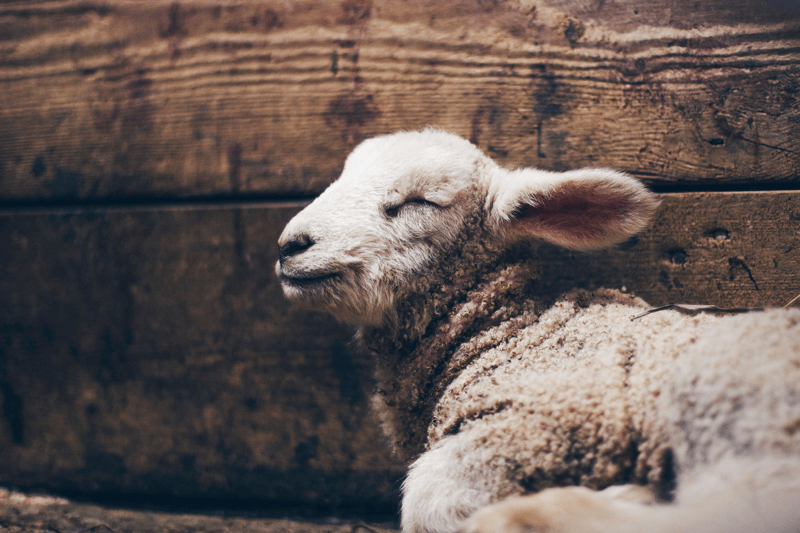
Paul showed how closely God had linked the sacrificial service with the prophecies relating to the One who was to be “brought as a lamb to the slaughter.” The Messiah was to give His life as “an offering for sin.” Looking down through the centuries to the scenes of the Saviour’s atonement, the prophet Isaiah had testified that the Lamb of God “poured out His soul unto death: and He was numbered with the transgressors; and He bare the sin of many, and made intercession for the transgressors.” Isaiah 53:7, 10, 12.
The Saviour of prophecy was to come, not as a temporal king, to deliver the Jewish nation from earthly oppressors, but as a man among men, to live a life of poverty and humility, and at last to be despised, rejected, and slain. The Saviour foretold in the Old Testament Scriptures was to offer Himself as a sacrifice in behalf of the fallen race, thus fulfilling every requirement of the broken law. In Him the sacrificial types were to meet their antitype, and His death on the cross was to lend significance to the entire Jewish economy.—The Acts of the Apostles, pp. 227, 228.