

The Cross and the Cost of Forgiveness
Read Hebrews 9:22–28. What does this passage say about the work of Christ in the heavenly sanctuary?
The idea that the heavenly sanctuary needs cleansing makes sense in the context of the Old Testament sanctuary. The sanctuary is a symbol of God’s government (1 Sam. 4:4, 2 Sam. 6:2), and the way God deals with the sin of His people affects the public perception of the righteousness of His government (Ps. 97:2). As ruler, God is the Judge of His people, and He is expected to be fair, vindicating the innocent and condemning the guilty. Thus, when God forgives the sinner, He carries judicial responsibility. The sanctuary, which represents God’s character and administration, is contaminated. This explains why God bears our sins when He forgives (Exod. 34:7, Num. 14:17–19, the original Hebrew for “forgiving” [nōśēʾ] in these verses means “carrying, bearing”).
The system of sacrifices in the Israelite sanctuary illustrated this point. When a person sought forgiveness, he brought an animal as a sacrifice in his behalf, confessed his sins over it, and slaughtered it. The blood of the animal was daubed upon the horns of the altar or sprinkled before the veil in the temple in the first apartment. Thus, the sin was symbolically transferred into the sanctuary. God took the sins of the people and bore them Himself.
In the Israelite system, cleansing from, or atonement for, sins occurred in two phases. During the year, repentant sinners brought sacrifices to the sanctuary, which cleansed them from their sin but transferred the sin to the sanctuary, to God Himself. At the end of the year, on the Day of Atonement, which was the day of judgment, God would cleanse the sanctuary, clearing His judicial responsibility by transferring the sins from the sanctuary to the scapegoat, Azazel, who represented Satan (Lev. 16:15–22).
This two-phase system, represented by the two apartments in the earthly sanctuary, which were a pattern of the heavenly sanctuary (Exod. 25:9, Heb. 8:5), permitted God to show mercy and justice at the same time. Those who confessed their sins during the year showed loyalty to God by observing a solemn rest and afflicting themselves on the Day of Atonement (Lev. 16:29–31). Those who did not show loyalty would be “cut off” (Lev. 23:27–32).
Think of what you would face if you had to face the just punishment for your sins. How should that truth help you understand what Christ has done for you?
Supplemental EGW Notes
Only once a year could the high priest enter into the most holy place, after the most careful and solemn preparation. No mortal eye but that of the high priest could look upon the sacred grandeur of that apartment, because it was the especial dwelling place of God’s visible glory. The high priest always entered it with trembling, while the people waited his return with solemn silence. Their earnest desires were to God for His blessing. Before the mercy seat God conversed with the high priest. If he remained an unusual time in the most holy, the people were often terrified, fearing that because of their sins or some sin of the priest, the glory of the Lord had slain him. But when the sound of the tinkling of the bells upon his garments was heard, they were greatly relieved. He then came forth and blessed the people.—The Story of Redemption, pp. 155, 156.
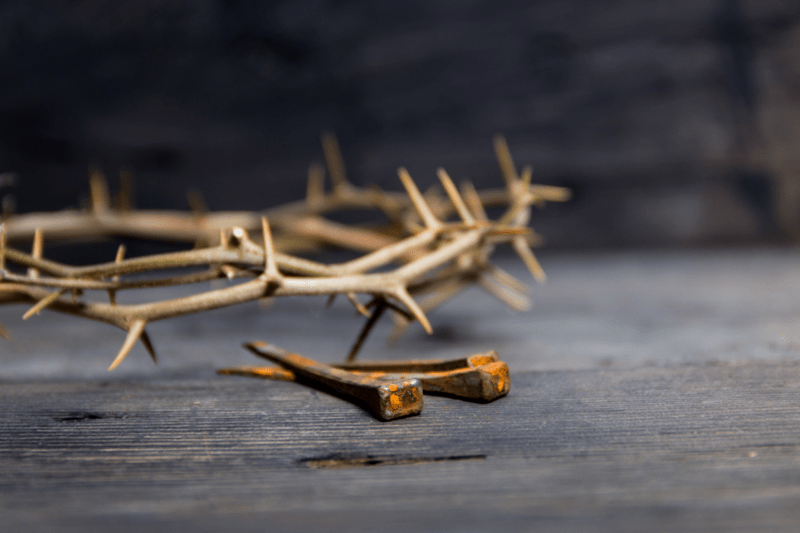
The spotless Son of God hung upon the cross, His flesh lacerated with stripes; those hands so often reached out in blessing, nailed to the wooden bars; those feet so tireless on ministries of love, spiked to the tree; that royal head pierced by the crown of thorns; those quivering lips shaped to the cry of woe. And all that He endured—the blood drops that flowed from His head, His hands, His feet, the agony that racked His frame, and the unutterable anguish that filled His soul at the hiding of His Father’s face—speaks to each child of humanity, declaring, It is for thee that the Son of God consents to bear this burden of guilt; for thee He spoils the domain of death, and opens the gates of Paradise. He who stilled the angry waves and walked the foam-capped billows, who made devils tremble and disease flee, who opened blind eyes and called forth the dead to life,—offers Himself upon the cross as a sacrifice, and this from love to thee. He, the Sin Bearer, endures the wrath of divine justice, and for thy sake becomes sin itself.—The Desire of Ages, pp. 755, 756.
In this life we can only begin to understand the wonderful theme of redemption. With our finite comprehension we may consider most earnestly the shame and the glory, the life and the death, the justice and the mercy, that meet in the cross; yet with the utmost stretch of our mental powers we fail to grasp its full significance. The length and the breadth, the depth and the height, of redeeming love are but dimly comprehended. The plan of redemption will not be fully understood, even when the ransomed see as they are seen and know as they are known; but through the eternal ages new truth will continually unfold to the wondering and delighted mind. Though the griefs and pains and temptations of earth are ended and the cause removed, the people of God will ever have a distinct, intelligent knowledge of what their salvation has cost.—The Great Controversy, p. 651.
The above quotations are taken from Ellen G. White Notes for the Sabbath School Lessons, published by Pacific Press Publishing Association. Used by permission.