

The Bible as History
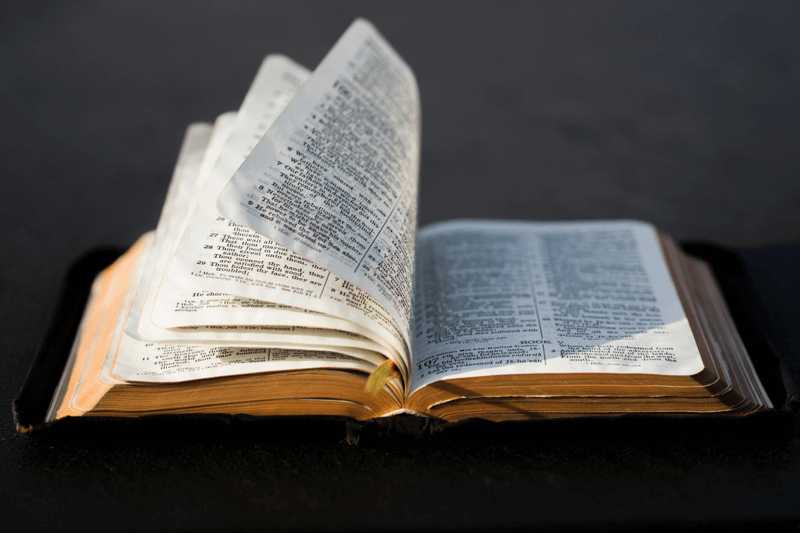
The Bible is unique when compared to other “holy” books because it is constituted in history. This means that the Bible is not merely the philosophical thoughts of a human being (like Confucius or Buddha), but it records God’s acts in history as they progress toward a specific goal. In the case of the Bible, those goals are (1) the promise of a Messiah and (2) the second coming of Jesus. This progression is unique to the Judeo-Christian faith, in contrast to the cyclical view of many other world religions from ancient Egypt to modern Eastern religions.
Read 1 Corinthians 15:3–5, 51–55; Romans 8:11; and 1 Thessalonians 4:14. What do these passages teach us about not only the historical truth of Christ’s resurrection but also what it means for us personally?
The testimony of the four Gospels and Paul is that Jesus died, was buried, bodily rose from the dead, and appeared to various human beings. This is corroborated by eyewitnesses who laid Him in the tomb and later saw it empty. Witnesses touched Jesus, and He ate with them. Mary Magdalene, Mary (the mother of Jesus), and other women saw Him as the resurrected Christ. The disciples spoke with Him on the road to Emmaus. Jesus appeared to them for the Great Commission. Paul writes that if the witness of Scripture is rejected, then our preaching and faith are in “vain” (1 Cor. 15:14). Other translations say “null and void” (REB) or “useless” (NIV). The disciples state, “ ‘It is true! The Lord has risen’ ” (Luke 24:34, NIV). The Greek term ontos refers to something that actually took place. It is translated, “really,” “surely,” or “indeed.” The disciples testify that “ ‘the Lord is risen indeed’ ” (NKJV).
Christ also is represented as the “firstfruits” (1 Cor. 15:20) of all those who died. The historical fact that Christ bodily rose from the dead and lives today is the guarantee that they, too, will be raised as He was raised. All the righteous “will be made alive in Christ” (1 Cor. 15:22, NRSV). The term here implies a future act of creation, when those “who belong to Christ,” or remain loyal to Him, will be raised “at His coming” (1 Cor. 15:23, NKJV) “at the last trumpet” (1 Cor. 15:52, NKJV).
Why is the promise of the resurrection so central to our faith, especially since we understand that the dead are asleep? Without it, why is our faith indeed in “vain”?
Additional Reading: Selected Quotes from Ellen G. White
"Many, very many, are questioning the verity and truth of the Scriptures. Human reasoning and the imaginings of the human heart are undermining the inspiration of the Word of God, and that which should be received as granted, is surrounded with a cloud of mysticism. Nothing stands out in clear and distinct lines, upon rock bottom. This is one of the marked signs of the last days. {1SM 15.2}
This Holy Book has withstood the assaults of Satan, who has united with evil men to make everything of divine character shrouded in clouds and darkness. But the Lord has preserved this Holy Book by His own miraculous power in its present shape—a chart or guidebook to the human family to show them the way to heaven. {1SM 15.3}"
"Men should let God take care of His own Book, His living oracles, as He has done for ages. They begin to question some parts of revelation, and pick flaws in the apparent inconsistencies of this statement and that statement. Beginning at Genesis, they give up that which they deem questionable, and their minds lead on, for Satan will lead to any length they may follow in their criticism, and they see something to doubt in the whole Scriptures. Their faculties of criticism become sharpened by exercise, and they can rest on nothing with a certainty. You try to reason with these men, but your time is lost. They will exercise their power of ridicule even upon the Bible. They even become mockers, and they would be astonished if you put it to them in that light. {1SM 17.5}
Brethren, cling to your Bible, as it reads, and stop your criticisms in regard to its validity, and obey the Word, and not one of you will be lost. The ingenuity of men has been exercised for ages to measure the Word of God by their finite minds and limited comprehension. If the Lord, the Author of the living oracles, would throw back the curtain and reveal His wisdom and His glory before them, they would shrink into nothingness and exclaim as did Isaiah, “I am a man of unclean lips, and I dwell in the midst of people of unclean lips” (Isaiah 6:5). {1SM 18.1}"
The murmurings of ancient Israel and their rebellious discontent, as well as the mighty miracles wrought in their favor and the punishment of their idolatry and ingratitude, are recorded for our benefit. The example of ancient Israel is given as a warning to the people of God, that they may avoid unbelief and escape His wrath. If the iniquities of the Hebrews had been omitted from the Sacred Record, and only their virtues recounted, their history would fail to teach us the lesson that it does. {4T 11.1}