

Joseph’s Rise to Power
For Joseph, Pharaoh’s dreams revealed what God was “about to do” (Gen. 41:28, NKJV) in the land. Joseph, however, does not call on Pharaoh to believe in his God. Instead, Joseph’s immediate response is action. Joseph proposes an economic program. Interestingly, only the economic part of Joseph’s discourse is retained by Pharaoh, who seems more interested in the economic lesson than in the spiritual meaning of the dream and God’s role in producing it.
Read Genesis 41:37–57. What is God’s place in the success of Joseph?
Pharaoh selects Joseph to take charge not so much because he has interpreted his dreams correctly and revealed the forthcoming problem of the land, but because he has a solution to that problem, because his “advice was good” (Gen. 41:37, NKJV), an opinion also shared by Pharaoh’s servants. Pharaoh’s choice seems to have been more pragmatic than religious. And yet, Pharaoh recognizes that the presence of “the Spirit of God” (Gen. 41:38) is in Joseph, who is qualified as “discerning and wise” (Gen. 41:39), an expression that characterizes the wisdom that God gives (see Gen. 41:33; compare with 1 Kings 3:12).
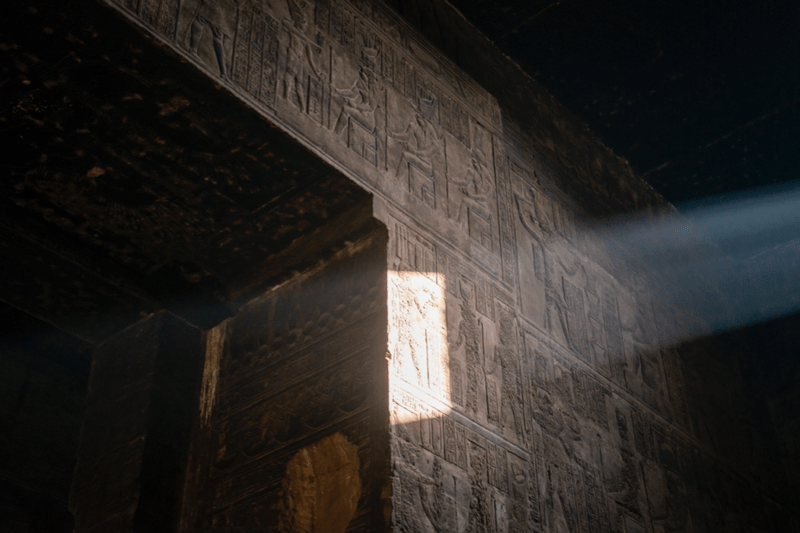
All the details reported in the biblical text fit the historical situation of Egypt at that time. Politically, the fact that Pharaoh appoints Joseph as vizier is not unusual in ancient Egypt, where cases of foreign viziers have been attested.
The next seven years are years of abundance in such a marked way that the grain production becomes “immeasurable” (Gen. 41:49, NKJV), a sign of supernatural providence. The comparison “as the sand of the sea” (Gen. 41:49) reveals that this is God’s blessing (Gen. 22:17). Joseph personally reflects that blessing in his own fruitfulness, a coincidence that evidences the presence of the same God behind the two phenomena. Joseph has two sons whose names show Joseph’s experience of God’s providence, which has transformed the memory of pain into joy (Manasseh) and the former affliction into fruitfulness (Ephraim). What a powerful example of how God turned something bad into something very good!
What are ways that others should be able to see, from the kind of lives that we live, the reality of our God?
Supplemental EGW Notes
Joseph traveled throughout all the land of Egypt, giving command to build immense store-houses, and using his clear head and excellent judgment to aid in the preparations to secure food, necessary for the long years of famine. At length the seven years of plenteousness in the land of Egypt ended. “And the seven years of dearth began to come, according as Joseph had said, and the dearth was in all lands, but in all the land of Egypt there was bread. And when all the land of Egypt was famished, the people cried to Pharaoh for bread. And Pharaoh said unto all the Egyptians, Go unto Joseph; what he saith to you do. And the famine was over all the face of the earth, and Joseph opened all the store-houses, and sold unto the Egyptians; and the famine waxed sore in the land of Egypt.”—Spiritual Gifts, vol. 3, pp. 152, 153.
Joseph was faithful to God, and his fidelity was a constant testimony to the true faith. It was to quench this light that Satan worked through the envy of Joseph’s brothers to cause him to be sold as a slave in a heathen land. God overruled events, however, so that the knowledge of Himself should be given to the people of Egypt. Both in the house of Potiphar and in the prison Joseph received an education and training that, with the fear of God, prepared him for his high position as prime minister of the nation. From the palace of the Pharaohs his influence was felt throughout the land, and the knowledge of God spread far and wide. The Israelites in Egypt also became prosperous and wealthy, and such as were true to God exerted a widespread influence.—Patriarchs and Prophets, p. 332.
To the people of Egypt and of all the nations connected with that powerful kingdom, God manifested Himself through Joseph. Why did the Lord choose to exalt Joseph so highly among the Egyptians? He might have provided some other way for the accomplishment of His purposes toward the children of Jacob; but He desired to make Joseph a light, and He placed him in the palace of the king, that the heavenly illumination might extend far and near. By his wisdom and justice, by the purity and benevolence of his daily life, by his devotion to the interests of the people—and that people a nation of idolaters—Joseph was a representative of Christ. In their benefactor, to whom all Egypt turned with gratitude and praise, that heathen people were to behold the love of their Creator and Redeemer. So in Moses also God placed a light beside the throne of the earth’s greatest kingdom, that all who would, might learn of the true and living God. And all this light was given to the Egyptians before the hand of God was stretched out over them in judgments.—Patriarchs and Prophets, pp. 368, 369.
The above quotations are taken from Ellen G. White Notes for the Sabbath School Lessons, published by Pacific Press Publishing Association. Used by permission.