

Why Were Sacrifices Needed?
Hebrews 9:15 explains that the death of Jesus as a sacrifice had the purpose of providing “redemption of the transgressions that were committed under the first covenant,” in order that the people of God might “receive the promise of the eternal inheritance” (NASB).
In the ancient Near East, a covenant between two persons or nations was a serious matter. It involved an exchange of promises under oath. It implied the assumption that the gods would punish those who broke the oath. Often, these covenants were ratified through the sacrifice of an animal.
For example, when God made a covenant with Abraham, the ceremony involved cutting animals in half (Gen. 15:6–21). The parties would walk between the parts as an acknowledgment that those animals represented the fate of the party who broke the covenant. Significantly, only God walked between the animals, for the purpose of communicating to Abraham that He would not break His promise.
Compare Genesis 15:6–21 and Jeremiah 34:8–22. What do these texts teach about the covenant?
The covenant with God gave Israel access to the Promised Land as their inheritance. It involved, however, a set of commandments and the sprinkling of blood upon an altar. This sprinkling implied the destiny of the party who broke the covenant. This is why Hebrews says that “without the shedding of blood there is no remission [of sins]” (Heb. 9:22, literal translation).
When Israel broke the covenant, God faced a painful dilemma. The covenant demanded the death of the transgressors, but God loved His people. If God should simply look the other way or refuse to punish the transgressors, His commandments would never be enforceable, and this world would descend into chaos.
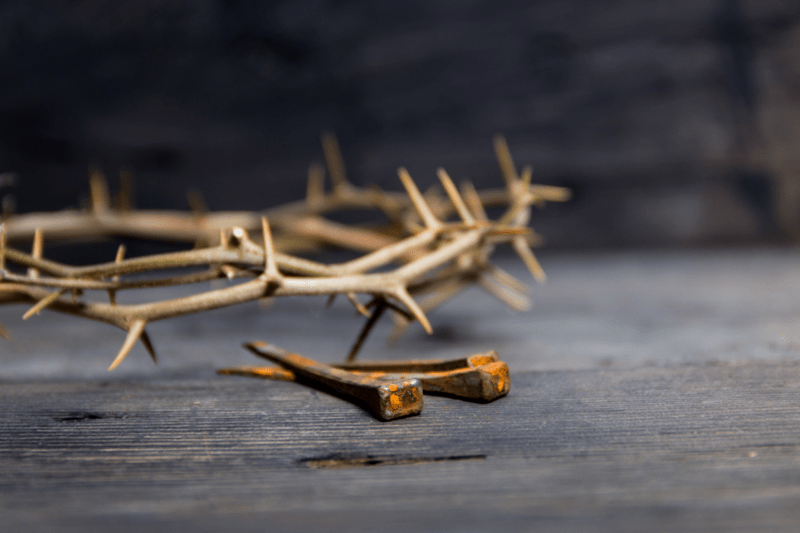
The Son of God, however, offered Himself as a Substitute. He died in our place so that we “may receive the promised eternal inheritance” (Heb. 9:15, 26, ESV; Rom. 3:21–26). That is, He was going to uphold the sanctity of His law while at the same time saving those who broke that law. And He could do this only through the Cross.
How can we see here why the law is so central to the gospel message?
Supplemental EGW Notes
The covenant of grace was first made with man in Eden, when after the Fall there was given a divine promise that the seed of the woman should bruise the serpent’s head. To all men this covenant offered pardon and the assisting grace of God for future obedience through faith in Christ. It also promised them eternal life on condition of fidelity to God’s law. Thus the patriarchs received the hope of salvation.
This same covenant was renewed to Abraham in the promise, “In thy seed shall all the nations of the earth be blessed.” Genesis 22:18. This promise pointed to Christ. So Abraham understood it (see Galatians 3:8, 16), and he trusted in Christ for the forgiveness of sins. It was this faith that was accounted unto him for righteousness. The covenant with Abraham also maintained the authority of God’s law. . . .
Though this covenant was made with Adam and renewed to Abraham, it could not be ratified until the death of Christ. It had existed by the promise of God since the first intimation of redemption had been given; it had been accepted by faith; yet when ratified by Christ, it is called a new covenant. The law of God was the basis of this covenant, which was simply an arrangement for bringing men again into harmony with the divine will, placing them where they could obey God’s law.—Patriarchs and Prophets, pp. 370, 371.
Christ is our Mediator and officiating High Priest in the presence of the Father. He was shown to John as a Lamb that had been slain, as in the very act of pouring out His blood in the sinner’s behalf. When the law of God is set before the sinner, showing him the depth of his sins, he should then be pointed to the Lamb of God, that taketh away the sin of the world. He should be taught repentance toward God and faith toward our Lord Jesus Christ. Thus will the labor of Christ’s representative be in harmony with His work in the heavenly sanctuary.—Testimonies for the Church, vol. 4, p. 395.
Cain came before God with murmuring and infidelity in his heart in regard to the promised sacrifice and the necessity of the sacrificial offerings. His gift expressed no penitence for sin. He felt, as many now feel, that it would be an acknowledgment of weakness to follow the exact plan marked out by God, of trusting his salvation wholly to the atonement of the promised Saviour. He chose the course of self-dependence. He would come in his own merits. He would not bring the lamb, and mingle its blood with his offering, but would present his fruits, the products of his labor. He presented his offering as a favor done to God, through which he expected to secure the divine approval. Cain obeyed in building an altar, obeyed in bringing a sacrifice; but he rendered only a partial obedience. The essential part, the recognition of the need of a Redeemer, was left out.—Patriarchs and Prophets, p. 72.
The above quotations are taken from Ellen G. White Notes for the Sabbath School Lessons, published by Pacific Press Publishing Association. Used by permission.