

The Prayers of the Saints
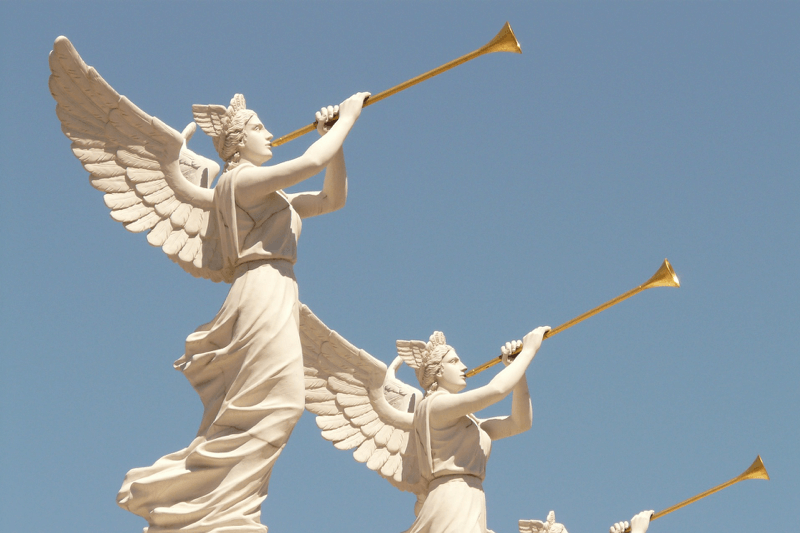
Revelation 8 opens with a picture of seven angels standing before God, ready to blow their trumpets. Before the trumpets are blown, another scene is inserted. Its purpose is to explain the theological meaning of the trumpets.
Read Revelation 8:3, 4 along with the description of the daily services in the temple in Jerusalem given below: a Jewish commentary on the Bible explains that at the evening sacrifice the lamb was placed upon the altar of burnt offering, and the blood was poured out at the base of the altar. An appointed priest took the golden censer inside the temple and offered incense on the golden altar in the Holy Place. When the priest came out, he threw the censer down on the pavement, producing a loud noise. At that point, seven priests blew their trumpets, marking the end of the temple services for that day.
One can see how the language of the evening service is used in Revelation 8:3–5. It is significant that the angel receives incense at the “golden altar which was before the throne” (Rev. 8:3, NKJV). The incense represents the prayers of God’s people (Rev. 5:8). Their prayers are now being answered by God.
Revelation 8:3–5 provides important information regarding the trumpets in Revelation:
a. The seven trumpets are God’s judgments on rebellious humanity in response to the prayers of His oppressed people.
b. The trumpets follow the death of Jesus as the Lamb and run consecutively throughout history until the Second Coming (see Rev. 11:15–18).
Read Revelation 8:5 along with Ezekiel 10:2. How does Ezekiel’s vision of hurling fire upon apostate Jerusalem elucidate the nature of the trumpets in Revelation?
The angel fills the censer with fire from the altar and hurls it down to the earth. Significantly, this fire comes from the very altar on which the prayers of the saints were offered. The fact that the fire comes from that very altar shows that the seven trumpet judgments fall upon the inhabitants of the earth in answer to the prayers of God’s people and also that God will intervene in their behalf in His appointed time. The throwing down of the censer also may be a warning that Christ’s intercession will not last forever. There will be a close of probationary time (see Rev. 22:11, 12).
Additional Reading: Notes from Ellen G. White
As the priests morning and evening entered the holy place at the time of incense, the daily sacrifice was ready to be offered upon the altar in the court without. This was a time of intense interest to the worshipers who assembled at the tabernacle. Before entering into the presence of God through the ministration of the priest, they were to engage in earnest searching of heart and confession of sin. They united in silent prayer, with their faces toward the holy place. Thus their petitions ascended with the cloud of incense, while faith laid hold upon the merits of the promised Saviour prefigured by the atoning sacrifice. The hours appointed for the morning and the evening sacrifice were regarded as sacred, and they came to be observed as the set time for worship throughout the Jewish nation. . . . In this custom Christians have an example for morning and evening prayer. . . . God . . . looks with great pleasure upon those who love Him, bowing morning and evening to seek pardon for sins committed and to present their requests for needed blessings.—Patriarchs and Prophets, p. 353.
Solemn events before us are yet to transpire. Trumpet after trumpet is to be sounded; vial after vial poured out one after another upon the inhabitants of the earth.
The world is soon to be left by the angel of mercy and the seven last plagues are to be poured out. . . . The bolts of God’s wrath are soon to fall, and when He shall begin to punish the transgressors there will be no period of respite until the end.—Last Day Events, p. 238.
[To] human sight it will appear that the people of God must soon seal their testimony with their blood as did the martyrs before them. They themselves begin to fear that the Lord has left them to fall by the hand of their enemies. It is a time of fearful agony. Day and night they cry unto God for deliverance. . . . Like Jacob, all are wrestling with God. Their countenances express their internal struggle. Paleness sits upon every face. Yet they cease not their earnest intercession.
Could men see with heavenly vision, they would behold companies of angels that excel in strength stationed about those who have kept the word of Christ’s patience. With sympathizing tenderness, angels have witnessed their distress and have heard their prayers. They are waiting the word of their Commander to snatch them from their peril. But they must wait yet a little longer. The people of God must drink of the cup and be baptized with the baptism. The very delay, so painful to them, is the best answer to their petitions. As they endeavor to wait trustingly for the Lord to work they are led to exercise faith, hope, and patience, which have been too little exercised during their religious experience. Yet for the elect’s sake the time of trouble will be shortened. “Shall not God avenge His own elect, which cry day and night unto Him?. . . I tell you that He will avenge them speedily.” Luke 18:7, 8. The end will come more quickly than men expect.—The Great Controversy, p. 630.