

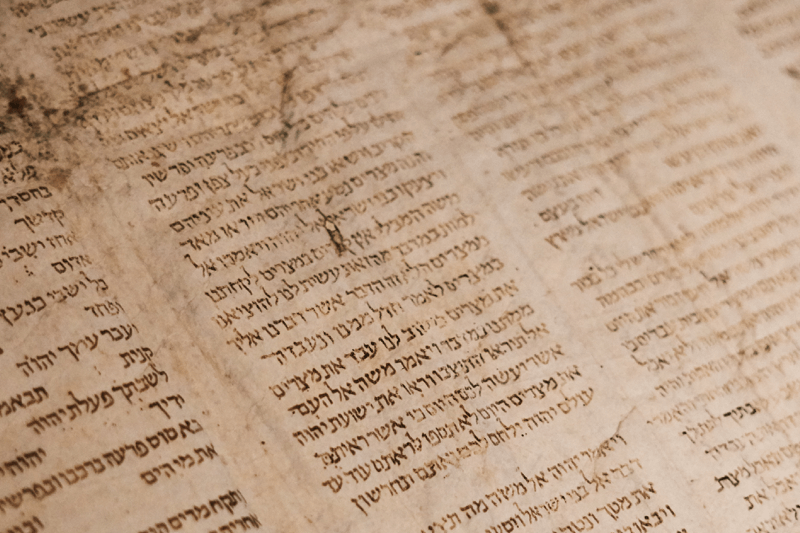
The Opening of the First Seal
Read Revelation 6:1–8 along with Leviticus 26:21–26 and Matthew 24:1–14. Note the common key words in these texts. What do you learn about the meaning of the first four seals on the basis of these parallels?
The events of the seven seals must be understood in the context of the Old Testament covenant curses, specified in terms of sword, famine, pestilence, and wild beasts (Lev. 26:21–26). Ezekiel calls them God’s “four severe judgments” (Ezek. 14:21, NKJV). They were the disciplinary judgments by which God, seeking to awaken His people to their spiritual condition, chastised them when they became unfaithful to the covenant. In a similar way, the four horsemen are the means that God uses to keep His people awake as they await Jesus’ return.
There also are close parallels between the first four seals and Matthew 24:4–14, in which Jesus explained what would happen in the world. The four horsemen are the means by which God keeps His people on the right track by reminding them that this world, as it now exists, is not their home.
Although symbolic, Revelation 6:1, 2 is about conquest, too. It brings to mind Revelation 19:11–16, which portrays Christ as riding a white horse and leading His heavenly armies of angels to deliver His people at the Second Coming. As a symbol of purity, the color white is regularly associated with Christ and His followers. The rider on the horse holds a bow and is given a crown (Rev. 6:2), which evokes the image of God in the Old Testament, riding a horse with a bow in His hand while conquering His people’s enemies (Hab. 3:8–13; Ps. 45:4, 5). The Greek word for the crown (Rev. 6:2) worn by the rider is stephanos, which is the crown of victory (Rev. 2:10, Rev. 3:11). This rider is a conqueror going forward conquering and to conquer.
The scene of the first seal describes the spread of the gospel, which started powerfully at Pentecost. Through the dispersion of the gospel, Christ began expanding His kingdom. There were, and still are, many territories to win and many people who have yet to become followers of Jesus before the ultimate conquest is realized with Christ’s coming in glory.
Prophetically, the scene of the first seal corresponds to the message to the church in Ephesus; it describes the apostolic period of the first century during which the gospel spread rapidly throughout the world (Col. 1:23).
Why must we always remember that, in Christ, we are on the winning side, regardless of our immediate circumstances?
Additional Reading: Selected Quotes from Ellen G. White
Because we know not the exact time of His coming, we are commanded to watch. “Blessed are those servants, whom the Lord when He cometh shall find watching.” Luke 12:37. Those who watch for the Lord’s coming are not waiting in idle expectancy. The expectation of Christ’s coming is to make men fear the Lord, and fear His judgments upon transgression. It is to awaken them to the great sin of rejecting His offers of mercy. Those who are watching for the Lord are purifying their souls by obedience to the truth. With vigilant watching they combine earnest working. Because they know that the Lord is at the door, their zeal is quickened to co-operate with the divine intelligences in working for the salvation of souls.—The Desire of Ages, p. 634.
“While the bridegroom tarried, they all slumbered and slept.” By the tarrying of the bridegroom is represented the passing of the time when the Lord was expected, the disappointment, and the seeming delay. In this time of uncertainty, the interest of the superficial and halfhearted soon began to waver, and their efforts to relax; but those whose faith was based on a personal knowledge of the Bible had a rock beneath their feet, which the waves of disappointment could not wash away. “They all slumbered and slept;” one class in unconcern and abandonment of their faith, the other class patiently waiting till clearer light should be given. Yet in the night of trial the latter seemed to lose, to some extent, their zeal and devotion. The halfhearted and superficial could no longer lean upon the faith of their brethren. Each must stand or fall for himself.—The Great Controversy, p. 394.
The divine Son of God came into our world, its Light and Life, to encompass the whole world and to attract and unite to Himself every human being who is under Satan’s discipline and rule. He invites them, “Come unto me, all ye that labour and are heavy laden, and I will give you rest. Take my yoke upon you, and learn of me; for I am meek and lowly in heart: and ye shall find rest unto your souls” (Matthew 11:28, 29). Thus He unites with Himself by a new inspiration of grace all who will come unto Him. He puts upon them His seal, His sign of obedience and loyalty to His holy Sabbath.—Manuscript 104, September 28, 1897.
The battle of Armageddon is soon to be fought. He on whose vesture is written the name, King of kings and Lord of lords, leads forth the armies of heaven on white horses, clothed in fine linen, clean and white. . . .
The battle of Armageddon will be fought, and that day must find none of us sleeping. Wide awake we must be, as wise virgins having oil in our vessels with our lamps. . . .
The power of the Holy Ghost must be upon us, and the Captain of the Lord’s host will stand at the head of the angels of heaven to direct the battle. Solemn events before us are yet to transpire. Trumpet after trumpet is to be sounded, vial after vial poured out one after another upon the inhabitants of the earth. Scenes of stupendous interest are right upon us.—Ellen G. White Comments, in The SDA Bible Commentary, vol. 7, p. 982.